
Getting Car Insurance for Teenagers
[:en]Just in case you’ve teens you know the first opportunity they need is getting a driving license. Well, its no secret that covering a teenage driver is incredibly costly. Driving records with adults automobile insurance providers are incredibly concerned with clients driving history. Teen automobile insurance prices can get significantly higher after one single traffic infraction. It is very important to stress to your teenager driver the need for obeying the laws of the road. This isn’t only essential for your teenager automobile insurance costs, but additionally your teenager driver’s safety.
GradesIt doesn’t seem like teenager automobile insurance agencies will be too concerned with your kid’s grades, just their driving history right? Wrong. Lots of businesses offering teenager automobile insurance will give quite large discount rates to pupils consistently attaining above average scores. So not only should you push the kids to get good grades for college, but also to economize money on teenager automobile insurance. VolunteerAlong the same lines as grades automobile insurance agencies look for liability in most regions of your teenager driver’s life. Auto insurance agencies sometimes are willing to give discount rates to drivers who offer in their community.
A good place to volunteer is a hospital, cleaning public places, houses for older individuals, churches, day camps, etc. In addition, teenager car insurance agencies might give discount rates to skilled boy scouts and girl scouts. Another parallel to the levels element is that any of these things look great on a school application. Your vehicle type – most likely the biggest factor besides driving history. Auto insurance agencies are well informed in regards to a vehicle’s safety so pick an automobile that’s safe. Avoid sports vehicles or another kind of flashy exotic vehicles, teenager car insurance services, particularly, know the temptation to drive fast as well as the fact that operation vehicles make that temptation virtually irresistible.
Another division of vehicles to avoid no matter what are sport utility vehicles. Large vehicles in accidents cause large sums of harm in a collision and automobile insurance agencies do not exactly love the idea of covering a teenager driving one. A good general guideline is to steer clear of any type of substantial vehicle for teens. In addition, if you’ve been to the gas station recently you know a more direct cost efficiency cause behind purchasing a smaller car.
Get started with a quote today and save big on your policy. Call (512) 444-4445
Avoid Expensive Auto Repairs

Is there something more stressful than having to cope with an unexpected auto trouble? Apart from having to find out your transport scenario, you also provide to discover a way to fix the problem without causing lots of financial stress. If you need to avoid last minute vehicle repairs, you need to work more on the defense than your offense. The saying An ounce of avoidance is worth a pound of remedy has lots of truth to it – particularly with regards to automobiles. Lots of typical auto problems might be prevented with proper maintenance. Instead of waiting for the vehicle to run curiously before you give consideration to the Check oil light, remember to change the oil every several thousand miles as well as to top it off when it is low.
Be sure to rotate the tires every few hundred miles and in addition to check your air levels. These simple actions could assist in preventing a lot of future trouble. Many technicians have rules about their clients buying components from outside resources. Some do it since they don’t need their customers purchasing components they cannot really use, but much more do it because they could earn money charging their customers for components along with their repair services. Find a mechanic that is willing to enable you to purchase your very own parts and you’ll save a lot. You may readily find used car components by doing a search on our website.
Sometimes it’s a good idea to use mechanics that focus on fixing your make and model of automobile. Most important automakers have service centers for their clients that focus on repairing and enhancing their vehicles. These service centers could save you a ton of cash on repair costs, especially whether you’ve a vehicle that is still under warranty. Once you get perhaps a dent or perhaps a ding in the vehicle, do not run to the closest auto body shop if you wish to conserve money. These stores do good work, but all that sanding, painting, and clear coating may cost you a lot.
Auto Insurance Benefits for Classic Cars
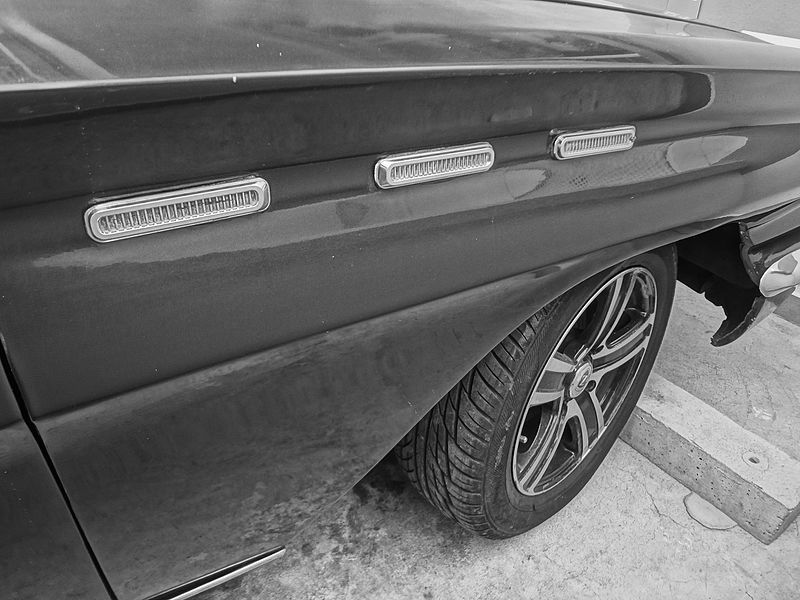
Classic automobile insurance is a real money saver that’s fantastic for collectors. EZ insurance coverage programs are ideal for fans who want to love their vehicles while having the satisfaction of knowing that their investments are well shielded. There are various resources to chew over when trying to find policies designed for classic cars and there are lots of advantages to having specialised coverage. Specialty insurance coverage programs are made to help individuals who’ve antique vehicles. Some of these coverages offer outstanding coverage with incredibly low rates compared to conventional policies. Classic car owners can rest assured they have the ability to get affordable insurance which offers great advantages.
It is hard to find a specialty auto insurance business that’s also in the occupation of appraising cars. Consumers should enter their investigations with the knowledge that the services were created to ensure the value of the antique vehicle. They’re in the business of making assessments without placing the value on a particular auto coverage policy. The firms do have techniques for ascertaining the value of the classic car. An excellent specialty insurance provider will work with you to discover a value for the antique vehicle. The process starts with an industry analysis to make sure that the collectable car will be given a proper worth.
The company also makes other factors in the process as well. An original stock car is fantastic for insurance agencies to evaluate because they’re well defined. There are various pricing resources and guides offering fast responses for suppliers and owners. The resources serve as general recommendations to follow. There are other considerations which must also be made even for an escort original vehicle. A well kept motorized vehicle will certainly be worth a lot one or more which requires some repairs and maintenance. Newly restored cars are a bit more complicated in that the recommendations are more from being accurate since the restoration may differ from one vehicle to another. Once you’ve your assessed value established, you’re well on your way to get great coverage for your antique vehicle. A classic automobile insurance program is fantastic for anybody who has a collectable of this sort. EZ Insurance is the leading website to grab the lowest insurance rate available for your location.
Choosing Your Deductible: High or Low?
When deciding on your auto insurance, there are several factors to consider. You have your monthly premium that you have to pay, and you also have your deductible amount that you will pay in the event of an accident. Most people understand the general rule that the higher the deductible you have, the lower your premium will be. For many people, that seems like a great way to save money each month. However, is the decision that easy? Should everyone just select the highest possible deductible in order to save money?
In short, selecting the highest possible deductible amount is not the best option for many people. Keep in mind that whatever amount you select is the amount that you will be required to pay if you get in an accident. While no one thinks they will ever find themself in that situation, the reality is that accidents do happen. If your deductible is $1500, you need to make sure that you have that money to pay in full before the insurance company will cover the rest. Being realistic, you should select an amount that you could pay without putting too much of a strain on your budget or savings account.
Another thing to keep in mind is the amount that your premium will go down as a result of your deductible going up. For some people, the change may be significant and the risk of having the higher deductible may be worth it. However, depending on your auto insurance company, the age of your car, your driving record, and other related factors, you may end up only saving 30 or 40 dollars annually. In this situation, having the higher deductible doesn’t save you much money, and could cost you way more in the long run.
It is important to keep in mind your driving situation when considering your deductible amount. If you drive in an area without much traffic and have a perfect driving record, it would make sense to consider raising your deductible. On the other hand, if you have a history of accidents or live in a big city with a lot of heavy traffic, your risk for getting in an accident is much higher. Therefore, having that higher deductible will most likely only cost you more money than you are saving on your premium.
Selecting your amount of insurance coverage and your deductible amount is no easy decision. When making your choice, consider both your monthly budget and any savings you have that could serve as an “emergency fund.” While it may be tempting to try and save as much as possible month to month, you could end up in a way worse situation where you have to take out a high interest loan in order to pay for damages to your car. Be sure to take the time to consider your situation, weigh the pros and cons of a high deductible, and get quotes from different companies to see which is the best fit for you.
Cooking in Your Car?
People might be talking about summer coming to an end and being excited for fall…but here in Austin it’s still hot! With temperatures still reaching into the 90s, it’s hard to get excited for sweater weather and everything else associated with cooler temperatures. In particular, with the weather still being so hot, parked cars easily become superheated after just a few minutes in the sun. A news story from this summer reported on a guy in Phoenix using his car as an oven in order to melt chocolate to make chocolate covered strawberries. He left the chocolate bars and strawberries on his dashboard and 20 minutes later, he had a lovely dessert!
A similar story comes courtesy of a woman in Melbourne, Australia who amazingly was able to make chocolate chip cookies, eggs, and even pasta inside of her car. The eggs cooked in an hour, and the pasta that started in cold water was completely cooked overnight. By just placing these items on her dashboard in direct sunlight she was able to create quite the feast!
While the concept of cooking in your car may seem funny and like a great summer experiment, it is important to note the dangers of heated cars, as it can cause serious damage and even death to anyone left inside for too long. The National Highway Traffic Safety Administration (NHTSA) reports that cars left in direct sunlight when the temperature is between 80 and 100 degrees can reach internal temperatures of 131-172 degrees. This occurs quickly, as cars heat up in minutes. Leaving children or animals in a heated car for any amount of time is a serious danger and should never happen.
If you have some spare time while the weather is still hot, try ‘car cooking!’ While you can have fun seeing which foods will successfully cook in this hot Austin weather, you are also raising awareness about the dangers of heated cars. We recommend trying to bake cookies…it will make your car smell delicious!
Flooded Car Fraud
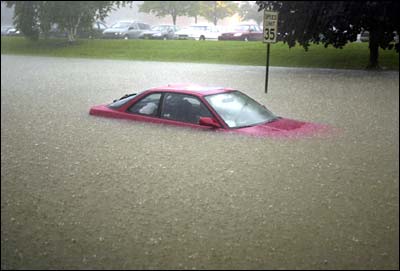
It’s been a long while since Central Texas has seen such a wet month of May, and while rainfall filling up the lakes and aquifers is a welcome way to start the summer, the tornados, pounding hail, and massive flash floods are not quite as appreciated. These storms have caused an estimated $250 million in auto insurance losses. As always, there are those lurking in the shadow of disaster, ready to profit off of other people’s misfortunate. In this case, it’s used car dealers who are taking these flooded, totaled cars and trying to sell them to unsuspecting buyers. So how do you avoid potentially purchasing a previously flooded car? Some signs are obvious, others less so.
- First and foremost, do a VIN check on any used car you’re thinking of buying. Cars that have suffered massive flood damage and are declared a total loss by an insurance company should be marked as such. Only about 88% of insurance companies report to VINCheck though, so it’s possible for these reports not to be entirely accurate.
- Look closely at the interior of the vehicle. Brand new upholstery, particularly if it doesn’t seem to match the carpet, is a pretty dead giveaway that the dealer is trying to cover up water stains and mold from flooding. Pull up the carpet and look for water residue and dried stains there as well.
- Get a good whiff of the interior of the car. No amount of cleaning and air freshener can hide the deeply ingrained faint damp smell that accompanies flooded cars.
- Rust in high places or under the gas pedal often indicate prolonged water exposure.
- Dealers will do a decently thorough cleaning of flooded vehicles, but may miss places like the glove compartment or under the seats, so check these spots for mud and silt.
- Does the car’s price seem too good to be true? Flooded vehicles are often offered at very low prices to move them faster, with fewer questions.
- Of course, the best and most failsafe way to make sure you aren’t purchasing a dud vehicle is to hire an inspector to pop the hood and check things out.
It’s kind of sad that buyers would need to go through this checklist, but unfortunately there are plenty of used car dealers with shaky moral compasses. So be safe rather than sorry and put in the extra effort to really investigate a potential used car purchase, especially soon after mass flash flooding.
Driving During a Downpour
[:es]
There’s no doubt about it – spring has been in full force for awhile now here in central Texas. Like the fall, it’s a mercurial time where the weather is concerned: a perfect, sunny 72 degrees one day, steamy and humid the next, followed by torrential rainstorms (all this within the same week, mind you.) It’s the last that concerns most drivers. Although we desperately need every drop of rain we can get, often the downpours happen in the wrong places – namely, not over Lake Travis in the middle of the night, but rather over I-35 and Mopac, during Austin’s morning and evening commutes. When this rain occurs, the whole game of driving changes, and since the vast majority of our days throughout the year are hot and dry, we often forget the new rules. With storms forecasted over the next week, take a minute to brush up on these rainy day driving tips:
Drive slow. We’ll start with the most obvious. We always advise to go the speed limit, but depending on the severity of the rain you make need to take it down 5-10 MPH or more. Stormy days are the time to become hyper-aware of your surroundings – slick roads make it extra important to keep adequate distance between you and the driver in front of you. Yes, this means you’ll probably get cut off by more reckless drivers changing lanes, so that you’ll continually have to slow down to allow a safe distance to open up again, but the minor inconvenience is certainly worth it. In order to accommodate these speed changes, avoid using cruise control.
Be aware of hydroplaning. Hydroplaning occurs when water builds up in front of the tires before the car’s weight can push it out of the way. This causes your car to skid uncontrollably. To try and avoid this, don’t slam on your breaks – rather, alternate applying and releasing the breaks. Never hit the gas hard when taking off from a stoplight: accelerate slowly. Finally, be sure to slow down amply when making turns. If you do start to hydroplane, it’s also important not to jerk the steering wheel – just release the gas and steer straight until you regain control.
Watch for water on the road. In central Texas, flash flooding is a major problem. There’s a good reason for those low water crossing warning signs. Water can make a road impassable in a matter of minutes, so when in doubt…turn around. Find an alternate route, or wait it out. Water often builds up along the sides of highways and curbs in residential areas, meaning if you’re in the lane near the shoulder you run the risk of hitting pockets of deep water that can spray up, temporarily blocking your view or even worse, causing you to hydroplane. So once again, go slow.
Finally, don’t forget to turn your headlights on and keep the AC pointed at your windshield to avoid fogging. If it’s raining so hard you can’t even see the car ahead of you, consider pulling over to wait it out. It probably won’t be long – after all, as the old saying goes, “If you don’t like the weather in Texas, wait 5 minutes.” Rainstorms may not last long, but they do make driving much higher risk, so be careful out there!
[:en]
There’s no doubt about it – spring has been in full force for awhile now here in central Texas. Like the fall, it’s a mercurial time where the weather is concerned: a perfect, sunny 72 degrees one day, steamy and humid the next, followed by torrential rainstorms (all this within the same week, mind you.) It’s the last that concerns most drivers. Although we desperately need every drop of rain we can get, often the downpours happen in the wrong places – namely, not over Lake Travis in the middle of the night, but rather over I-35 and Mopac, during Austin’s morning and evening commutes. When this rain occurs, the whole game of driving changes, and since the vast majority of our days throughout the year are hot and dry, we often forget the new rules. With storms forecasted over the next week, take a minute to brush up on these rainy day driving tips:
Drive slow. We’ll start with the most obvious. We always advise to go the speed limit, but depending on the severity of the rain you make need to take it down 5-10 MPH or more. Stormy days are the time to become hyper-aware of your surroundings – slick roads make it extra important to keep adequate distance between you and the driver in front of you. Yes, this means you’ll probably get cut off by more reckless drivers changing lanes, so that you’ll continually have to slow down to allow a safe distance to open up again, but the minor inconvenience is certainly worth it. In order to accommodate these speed changes, avoid using cruise control.
Be aware of hydroplaning. Hydroplaning occurs when water builds up in front of the tires before the car’s weight can push it out of the way. This causes your car to skid uncontrollably. To try and avoid this, don’t slam on your breaks – rather, alternate applying and releasing the breaks. Never hit the gas hard when taking off from a stoplight: accelerate slowly. Finally, be sure to slow down amply when making turns. If you do start to hydroplane, it’s also important not to jerk the steering wheel – just release the gas and steer straight until you regain control.
Watch for water on the road. In central Texas, flash flooding is a major problem. There’s a good reason for those low water crossing warning signs. Water can make a road impassable in a matter of minutes, so when in doubt…turn around. Find an alternate route, or wait it out. Water often builds up along the sides of highways and curbs in residential areas, meaning if you’re in the lane near the shoulder you run the risk of hitting pockets of deep water that can spray up, temporarily blocking your view or even worse, causing you to hydroplane. So once again, go slow.
Finally, don’t forget to turn your headlights on and keep the AC pointed at your windshield to avoid fogging. If it’s raining so hard you can’t even see the car ahead of you, consider pulling over to wait it out. It probably won’t be long – after all, as the old saying goes, “If you don’t like the weather in Texas, wait 5 minutes.” Rainstorms may not last long, but they do make driving much higher risk, so be careful out there!
[:de]
There’s no doubt about it – spring has been in full force for awhile now here in central Texas. Like the fall, it’s a mercurial time where the weather is concerned: a perfect, sunny 72 degrees one day, steamy and humid the next, followed by torrential rainstorms (all this within the same week, mind you.) It’s the last that concerns most drivers. Although we desperately need every drop of rain we can get, often the downpours happen in the wrong places – namely, not over Lake Travis in the middle of the night, but rather over I-35 and Mopac, during Austin’s morning and evening commutes. When this rain occurs, the whole game of driving changes, and since the vast majority of our days throughout the year are hot and dry, we often forget the new rules. With storms forecasted over the next week, take a minute to brush up on these rainy day driving tips:
Drive slow. We’ll start with the most obvious. We always advise to go the speed limit, but depending on the severity of the rain you make need to take it down 5-10 MPH or more. Stormy days are the time to become hyper-aware of your surroundings – slick roads make it extra important to keep adequate distance between you and the driver in front of you. Yes, this means you’ll probably get cut off by more reckless drivers changing lanes, so that you’ll continually have to slow down to allow a safe distance to open up again, but the minor inconvenience is certainly worth it. In order to accommodate these speed changes, avoid using cruise control.
Be aware of hydroplaning. Hydroplaning occurs when water builds up in front of the tires before the car’s weight can push it out of the way. This causes your car to skid uncontrollably. To try and avoid this, don’t slam on your breaks – rather, alternate applying and releasing the breaks. Never hit the gas hard when taking off from a stoplight: accelerate slowly. Finally, be sure to slow down amply when making turns. If you do start to hydroplane, it’s also important not to jerk the steering wheel – just release the gas and steer straight until you regain control.
Watch for water on the road. In central Texas, flash flooding is a major problem. There’s a good reason for those low water crossing warning signs. Water can make a road impassable in a matter of minutes, so when in doubt…turn around. Find an alternate route, or wait it out. Water often builds up along the sides of highways and curbs in residential areas, meaning if you’re in the lane near the shoulder you run the risk of hitting pockets of deep water that can spray up, temporarily blocking your view or even worse, causing you to hydroplane. So once again, go slow.
Finally, don’t forget to turn your headlights on and keep the AC pointed at your windshield to avoid fogging. If it’s raining so hard you can’t even see the car ahead of you, consider pulling over to wait it out. It probably won’t be long – after all, as the old saying goes, “If you don’t like the weather in Texas, wait 5 minutes.” Rainstorms may not last long, but they do make driving much higher risk, so be careful out there!
[:fr]
There’s no doubt about it – spring has been in full force for awhile now here in central Texas. Like the fall, it’s a mercurial time where the weather is concerned: a perfect, sunny 72 degrees one day, steamy and humid the next, followed by torrential rainstorms (all this within the same week, mind you.) It’s the last that concerns most drivers. Although we desperately need every drop of rain we can get, often the downpours happen in the wrong places – namely, not over Lake Travis in the middle of the night, but rather over I-35 and Mopac, during Austin’s morning and evening commutes. When this rain occurs, the whole game of driving changes, and since the vast majority of our days throughout the year are hot and dry, we often forget the new rules. With storms forecasted over the next week, take a minute to brush up on these rainy day driving tips:
Drive slow. We’ll start with the most obvious. We always advise to go the speed limit, but depending on the severity of the rain you make need to take it down 5-10 MPH or more. Stormy days are the time to become hyper-aware of your surroundings – slick roads make it extra important to keep adequate distance between you and the driver in front of you. Yes, this means you’ll probably get cut off by more reckless drivers changing lanes, so that you’ll continually have to slow down to allow a safe distance to open up again, but the minor inconvenience is certainly worth it. In order to accommodate these speed changes, avoid using cruise control.
Be aware of hydroplaning. Hydroplaning occurs when water builds up in front of the tires before the car’s weight can push it out of the way. This causes your car to skid uncontrollably. To try and avoid this, don’t slam on your breaks – rather, alternate applying and releasing the breaks. Never hit the gas hard when taking off from a stoplight: accelerate slowly. Finally, be sure to slow down amply when making turns. If you do start to hydroplane, it’s also important not to jerk the steering wheel – just release the gas and steer straight until you regain control.
Watch for water on the road. In central Texas, flash flooding is a major problem. There’s a good reason for those low water crossing warning signs. Water can make a road impassable in a matter of minutes, so when in doubt…turn around. Find an alternate route, or wait it out. Water often builds up along the sides of highways and curbs in residential areas, meaning if you’re in the lane near the shoulder you run the risk of hitting pockets of deep water that can spray up, temporarily blocking your view or even worse, causing you to hydroplane. So once again, go slow.
Finally, don’t forget to turn your headlights on and keep the AC pointed at your windshield to avoid fogging. If it’s raining so hard you can’t even see the car ahead of you, consider pulling over to wait it out. It probably won’t be long – after all, as the old saying goes, “If you don’t like the weather in Texas, wait 5 minutes.” Rainstorms may not last long, but they do make driving much higher risk, so be careful out there!
[:]